The One Christ

An Enquiry into the Manner of the Incarnation

Frank Weston


Kenotic theology, once considered a historical curiosity, is experiencing a remarkable resurgence that extends far beyond traditional theological circles. Contemporary thinkers such as David Bentley Hart and John Milbank have deeply engaged with kenotic ideas, applying them to a wide range of philosophical and theological questions. Hart, in particular, has explored how a kenotic understanding of God's relationship to the world might inform our approach to the problem of evil and the nature of divine freedom. Milbank, from his Radical Orthodoxy perspective, has considered how kenosis might reshape our understanding of divine power and the relationship between theology and secular thought.

Perhaps most surprisingly, the concept of kenosis has found traction in unexpected intellectual quarters, largely due to the work of Slovenian philosopher Slavoj Žižek. Despite his atheistic stance, Žižek has repeatedly engaged with Christian theology, particularly the notion of kenosis, seeing in it a powerful model for understanding subjectivity and revolutionary politics. His provocative readings of kenosis as a form of radical emptying that creates space for true freedom and ethical action have sparked discussions far beyond the boundaries of traditional theology.

It is in this context of renewed interest in kenotic thought that Frank Weston's The One Christ, first published in 1907, finds unexpected relevance. This seminal work in the development of kenotic Christology offers fresh perspectives on the perennial questions of Christ's divinity and humanity. Weston's innovative approach to kenotic theory, which posits a self-limited Logos as the subject of Christ's humanity, provides a nuanced solution to the Christological dilemmas that have challenged theologians for centuries. His sophisticated engagement with concepts of personhood and consciousness anticipates many modern philosophical discussions, making The One Christ a bridge between classical Christian thought and contemporary critical theory.

Weston's insistence on the permanence of Christ's humanity and the ongoing nature of the Incarnation resonates with current theological concerns about God's immanence and involvement in the world. His careful navigation between traditional orthodoxy and modern critical thought provides a model for engaging with scientific and philosophical challenges to religious belief.

This edition features a comprehensive introduction that situates Weston's work within its historical context and traces its influence on subsequent theological developments. The One Christ remains a challenging and rewarding text, offering profound insights into the nature of God, the meaning of the Incarnation, and the relationship between divinity and humanity. It invites readers to engage deeply with one of Christianity's central mysteries, providing resources for ongoing theological reflection in our contemporary world.
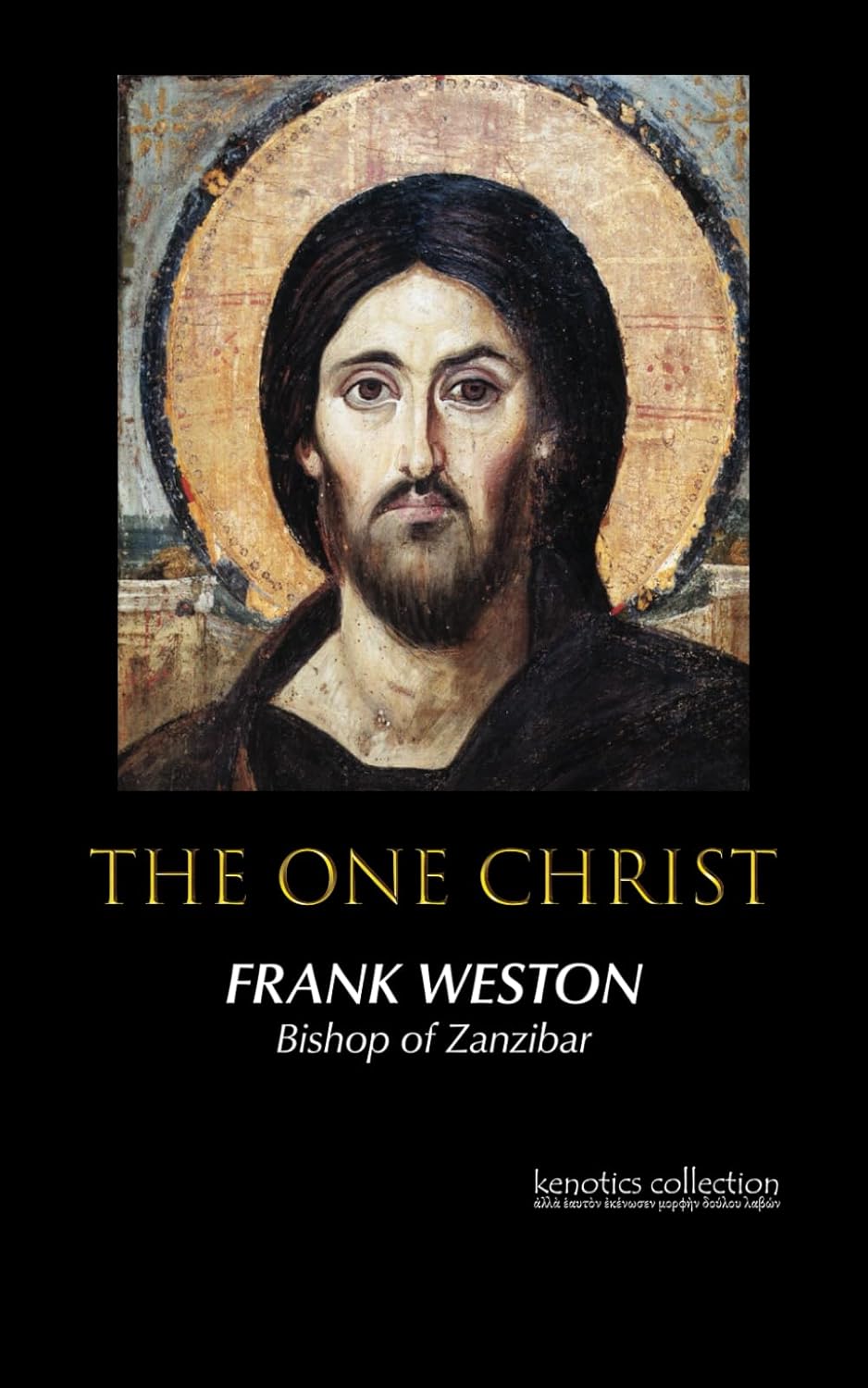
The One Christ

July 8, 2024

329 pages

12.7x20.32 cm (5x8 in)

ISBN 978-2-38366-041-5

$14.00

All our books are easily available online. However, by ordering through your local bookstore, you save on shipping costs and support places of living and independent intellectuality.

Extracts

From the Preface: Weston's Own Words

This book deals with one point of Christology alone, and that the manner of the Incarnation of our Lord Jesus Christ. It represents an attempt to discover the exact content of the Subject, or Ego, of the manhood of our Lord. It does not in any way deal with the doctrine of the Incarnation as a whole, nor is it in any sense a text-book.

I beg that my readers will persevere in seeking the meaning of what I have written, in spite of the many blemishes that mar my work. This is my first attempt at serious authorship, and it has been made in the middle of my work as a missionary priest, in a country where books are few and which is far away from all centres of Theological thought.

On the Contemporary Urgency of the Question

It has grown in interest as our reverence for manhood has deepened. Yet so academic was it at first and for so long a time that it is still held to be a subordinate question of the Faith. So long as men hold fast the fact of the Incarnation, is not the manner of it merely a question for the Schools?

In this case one of the things which have helped to open our eyes is the higher criticism of the Bible. The claim that Christ's knowledge of the Old Testament is not essentially different from that of a Jewish Rabbi has made us realize the problem of the manner of His incarnate life. Is it possible for a Christian to worship Christ as God, to defer to Him as unerring in His teaching about God, and yet to class His statements about the Old Testament with the uncritical views of a Gamaliel? Such a question is widely asked. Even more widely than it is asked verbally, the lack of a satisfying answer is sorely felt.

On Defining Kenosis

Kenosis is a Greek substantive denoting an emptying. It has passed into theology from St. Paul's statement that our Lord "emptied Himself" of some thing belonging to the divine state in taking upon Himself our manhood. Generally in Christology, Kenosis denotes that action by which the divine Son modified the exercise of His divine powers so as to allow to the full the free action of the powers proper to His manhood.

It may be used of any such modification, from a mere self-restraint in the use of His powers to a voluntary self-abandonment of the attributes that lie behind those powers in action. It may be so used, wide as the difference is between the two extremes of thought, inasmuch as each writer claims St. Paul as a witness to his theory, quoting him as an apostolic authority for the Kenosis in whatever degree it is postulated.

On the Self-Limited Logos

Weston proposes that the subject of Christ's humanity is the self-limited Logos. Unlike earlier theories that suggested a divestment of divine attributes, Weston argues for a voluntary restraint of divine powers, compatible with genuine human experience yet preserving the fullness of Christ's divinity.

Weston maintains that the incarnate Christ retains all divine attributes, but their expression is now mediated through his assumed human nature. This allows him to affirm both Christ's divine omniscience and the biblical accounts of his human limitations. Weston insists on the permanence of Christ's humanity, even in his exalted state. This offers a compelling vision of the enduring union between God and humanity and provides a robust foundation for understanding Christ's continuing mediatorial role.

About the Author

Frank Weston (1871–1924) was a towering figure in early 20th-century Anglican theology. After a stellar academic career at Trinity College, Oxford, where he obtained a first-class honors degree in theology, Weston dedicated his life to missionary work in Africa. As Bishop of Zanzibar from 1908 until his death, he tirelessly advocated for the rights of Africans under colonial rule, combining theological acumen with pastoral zeal and social conscience.

Weston's theological development was shaped by the intellectual currents of his time. The late 19th century saw significant shifts in British theology, influenced by German biblical criticism, the theory of evolution, and new philosophical ideas. These developments raised challenging questions about the nature of Christ's humanity and the relationship between divine and human knowledge. The publication of Lux Mundi in 1889, featuring Charles Gore's controversial essay on the limitations of Christ's knowledge, thrust kenotic ideas into the spotlight of Anglican theology.

The One Christ represents a high-water mark in Anglican kenotic Christology, synthesizing profound theological reflection with pastoral sensitivity. Weston's work demonstrates a commitment to orthodox Christological formulations while engaging seriously with modern biblical criticism and philosophical developments. His ability to hold together divine transcendence and intimate involvement in human experience continues to offer valuable insights for contemporary theological reflection.

Despite being written in the midst of his missionary work in Africa, far from theological centers and libraries, The One Christ has had enduring influence. Weston's emphasis on the genuine humanity of Christ and the real limitations experienced in the Incarnation resonated with a church increasingly aware of the historical Jesus. Moreover, his insistence on the permanence of Christ's humanity provided a strong theological foundation for Christian social engagement, a theme that would become increasingly important in 20th-century Anglican thought.